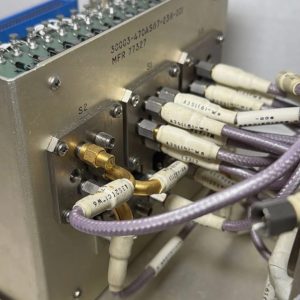
The Aviation Switching Module – NSN 4920-01-250-2696 (AS-IS / Untested) combines recognizable aviation hardware, an identifiable National Stock Number, potential electrical-control functionality, and commercial value for informed specialist buyers.
An Aircraft Switching Module may control, route, select, isolate, or distribute compatible electrical signals or circuits, while an Aerospace Switching Module should be evaluated according to its exact internal design and intended equipment relationship.
An Aircraft Electrical Switching Module, Aviation Electrical Control Module, Aircraft Power Switching Module, Aerospace Electrical Control Unit, and Aircraft Signal Switching Module may describe related switching or control functions, but the exact purpose of this NSN should be verified before use.
An Aircraft Switching Unit can support specialized signal or circuit management, but an Aerospace Power Distribution Module or Aviation Power Control Module may use different internal architecture and electrical requirements.
Overview of the Aviation Switching Module
Accurate NSN verification helps reduce purchasing errors and prevents an unrelated module from being represented as compatible equipment.
Unknown markings should be photographed and recorded rather than interpreted without support.
Understanding AS-IS and Untested Condition
Transparent AS-IS terms help specialists evaluate price and risk realistically.
Professional Aerospace Switching Unit evaluation protects the module, technician, test equipment, and any associated aerospace system.
Aircraft Circuit Selection Equipment
The actual role depends on internal circuitry, switch configuration, connector pinout, associated system design, and technical documentation.
Switch movement can be checked gently for obvious binding or damage, but mechanical movement does not establish electrical operation.
Inspecting Aerospace Electrical Hardware
Age, handling, impact, humidity, temperature changes, contamination, and long-term storage can affect both mechanical and electrical condition.
Connectors should be examined for bent pins, pushed-back contacts, corrosion, contamination, cracked inserts, damaged threads, broken keyways, missing caps, and impact marks.
Evaluating Aircraft Electrical Components
External condition cannot confirm the state of hidden relays, contacts, circuit boards, wiring, or internal components.
If the enclosure is opened for professional inspection, the process should be documented with photographs and organized hardware control.
Choosing an Aviation Electrical Control Module
The module may interact with relays, switches, indicators, sensors, power sources, test connections, or other control equipment.
Control labels and switch legends can provide useful clues, but they should not be used as the only source of technical identification.
Power Switching Module Inspection
A switch that moves normally may still contain burned, corroded, welded, or high-resistance electrical contacts.
A module with unknown electrical condition should remain clearly labeled as untested until formal evaluation occurs.
Electrical Control Unit Restoration
The repair process should preserve original markings and configuration whenever practical.
Replacement components should match the required electrical, mechanical, thermal, and environmental characteristics of the original design.
Aviation Signal Routing Equipment
An incorrect connection may damage sensitive electronics even when the module itself receives little power.
The module should not be modified with unshielded wiring or improvised connectors solely for convenience.
Aviation Module System Integration
Clear intended use helps establish realistic expectations for an AS-IS Aviation Control Module.
Accurate configuration review reduces the risk of an unsuitable Aviation Control Module acquisition.
Aircraft Test and Support Equipment
Its value depends on identity, completeness, cosmetic condition, connector integrity, internal status, rarity, and availability of documentation.
Training use should avoid destructive modifications when the component has collectible or restoration value.
Choosing an Aerospace Power Distribution Module
Power distribution equipment may use switches, relays, terminals, bus structures, circuit protection, and control interfaces depending on design.
Mounting points should be inspected because secure installation can affect grounding, cooling, vibration resistance, and connector alignment.
Maintaining Legacy Aviation Control Equipment
An Aircraft Electrical Control Unit should receive an organized inspection covering identification, enclosure condition, connectors, controls, labels, hardware, internal components, and signs of environmental exposure.
Continuity measurements, insulation checks, contact-resistance testing, and component examination may be appropriate when performed by qualified personnel.
Untested Aviation Power Equipment
Responsible product information protects buyers seeking an Aviation Power Control Module.
Warning labels should remain visible and legible.
Aviation Switching System Troubleshooting
Without those references, operational claims should remain limited.
A replacement AS-IS unit may provide useful comparative parts but should not be installed without evaluation.
Aerospace Switching Unit Storage and Handling
Proper storage helps preserve the Aerospace Switching Unit for testing, restoration, or collection.
The module should be enclosed in a moisture-resistant protective layer and placed inside a strong outer carton or suitable shipping case.
Evaluating Surplus Aerospace Equipment
AS-IS equipment may offer attractive value when the purchaser has the knowledge and resources required for evaluation.
Remote buyers should request current photographs of the actual unit instead of relying on catalog images or pictures of similar equipment.
Untested Aviation Equipment Condition Checklist
The seller should disclose corrosion, missing parts, broken controls, damaged connectors, previous repairs, opened seals, burned areas, contamination, and signs of impact.
- Verify the module identity through its NSN, data plate, physical configuration, connector arrangement, and available technical references.
- Inspect switches, knobs, indicators, connectors, pins, wiring, and terminals for damage, looseness, contamination, overheating, or unauthorized repair.
- Inspect and photograph the module immediately after delivery before cleaning, opening, powering, wiring, modifying, or removing components.
Testing the Aviation Switching Module
A methodical process reduces the risk of damaging rare aviation equipment.
Partial operation should not be presented as complete certification, calibration, or airworthiness.
Documenting Aviation Electronics Restoration
Original labels, wiring routes, fasteners, finishes, and component locations should be preserved whenever practical.
The final product status should describe only the functions that were evaluated successfully.
Buying NSN 4920-01-250-2696
The Aviation Switching Module – NSN 4920-01-250-2696 (AS-IS / Untested) may suit aviation workshops, military-surplus collectors, aerospace technicians, educational programs, equipment restorers, and specialist parts buyers.
The strongest buying decision begins with confirming the NSN, manufacturer, part number, serial number, configuration, connector layout, condition, storage history, modification status, included equipment, and intended use.
Whether the item is purchased for restoration, training, parts recovery, display, testing, inventory, or professional repair, transparent information and controlled handling provide the strongest foundation.
With responsible purchasing, NSN research, connector protection, current-limited evaluation, and documented restoration, the component can remain a useful aviation asset.